Can You Wrap Over Rivets?
Quick answer Yes. Rivets do not need to be removed, and a good installer does not cut around each one. Conformable cast wrap film, worked down around every rivet head with heat and careful pressure, follows the rivet's shape and stays put. The result depends on the right film, a clean surface and patient installation.
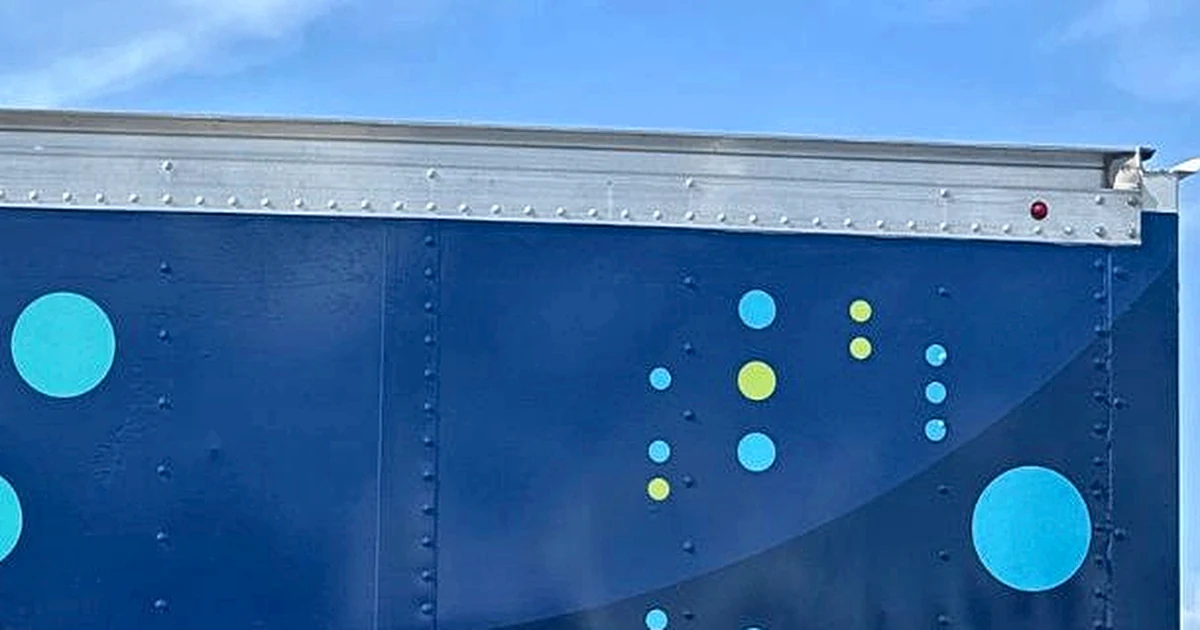
Yes, Rivets Can Be Wrapped
If you own an enclosed trailer or a box truck, you have probably looked at those long rows of rivets and wondered how a wrap could ever lie flat over them. It is one of the questions we hear most often at Tampa Auto Wraps, and the short answer is yes. We wrap directly over rivets, the rivets stay in place, and we do not cut a hole around each one.
The reason people worry is easy to understand. A rivet is a small dome sticking up from a flat panel, and a typical trailer side can have dozens of them in every seam line. If you picture a large sticker laid over that surface, you picture bubbles and tents. A professional wrap works differently, because the film is not just laid over the rivets. It is shaped around them.
So what actually happens to the vinyl at each rivet?
How Wrap Film Conforms Around a Rivet
Wrap film is applied to the flat panel first, then each rivet is handled on its own. The installer warms the film around the rivet head so it becomes soft and flexible, then presses it down and around the dome until it sits tight against the rivet and the panel around it. Once the film cools, it holds that shape.
That step is repeated for every rivet on every panel. On a full trailer wrap, that can mean working hundreds of rivets one at a time. It is slow, detailed work, and it is a big part of why rivet sides take longer to install than a smooth van door.
A few things decide whether a rivet area looks clean or starts to lift later.
The Film Itself
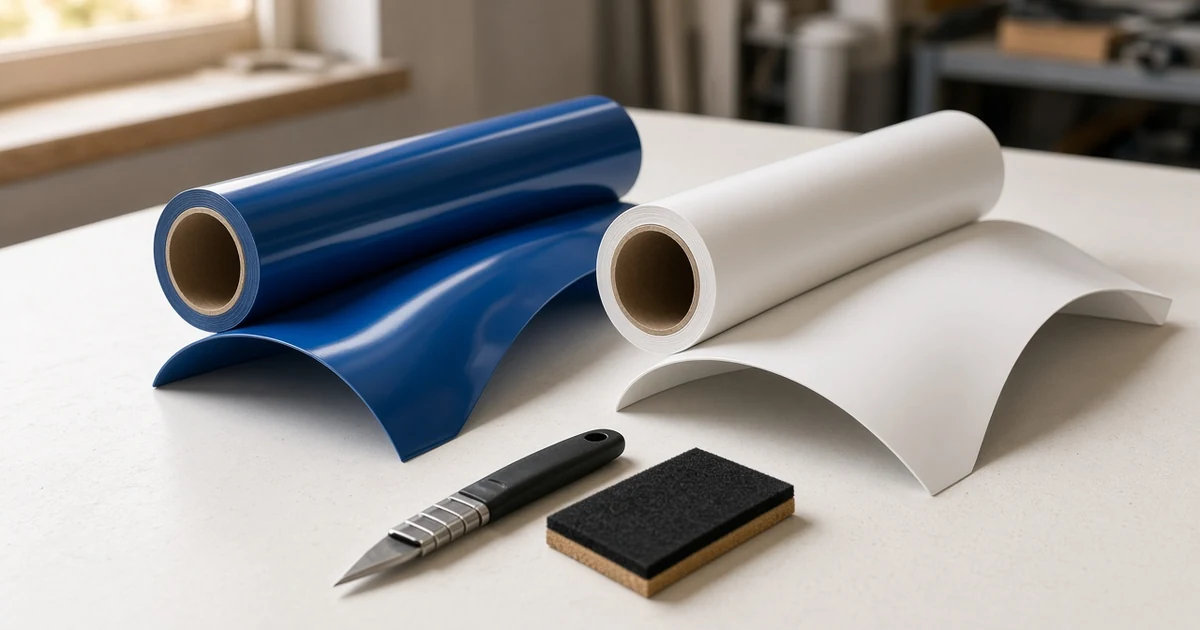
Conformable cast wrap films are made to stretch and hold a new shape. Stiffer films want to spring back to flat, which is how bubbles and lifting start around rivets.
The Laminate Layer
The clear overlaminate on top of a printed wrap has to flex with the printed film. A matched film and laminate system moves together.
A Clean Surface
Grease, wax and road film collect around rivet heads. If they are not removed, the film has nothing solid to grab.
Heat and Patience
Rushing the rivet work is the most common reason for problems that show up weeks later.
When those pieces line up, rivets are a normal part of trailer and truck work, not a weak spot. If you want to dig into why film choice matters so much, our article on Cast Vinyl vs. Calendared Vinyl explains the difference.
Why We Don’t Cut Around Every Rivet
Some people assume the safest approach is to cut a small hole around each rivet so the film never has to stretch. On a commercial wrap, that usually creates more problems than it solves. Every cut is a new edge, and edges are where dirt, water and pressure washer spray get under vinyl. Hundreds of tiny cut edges also show up as a speckled pattern once the trailer is dirty.
Wrapping over the rivet keeps the printed design continuous. Your logo, photos and phone number run across the panel without a ring cut into them every few inches, which looks better from the road and holds up better in the wash.
What Rivets Look Like Under a Finished Wrap
A wrapped rivet is not invisible. You will still see the small dome under the design, because the film follows the shape of whatever is under it. From a few feet away, though, the rows of rivets tend to disappear into the graphics, especially with a busy, full color design.
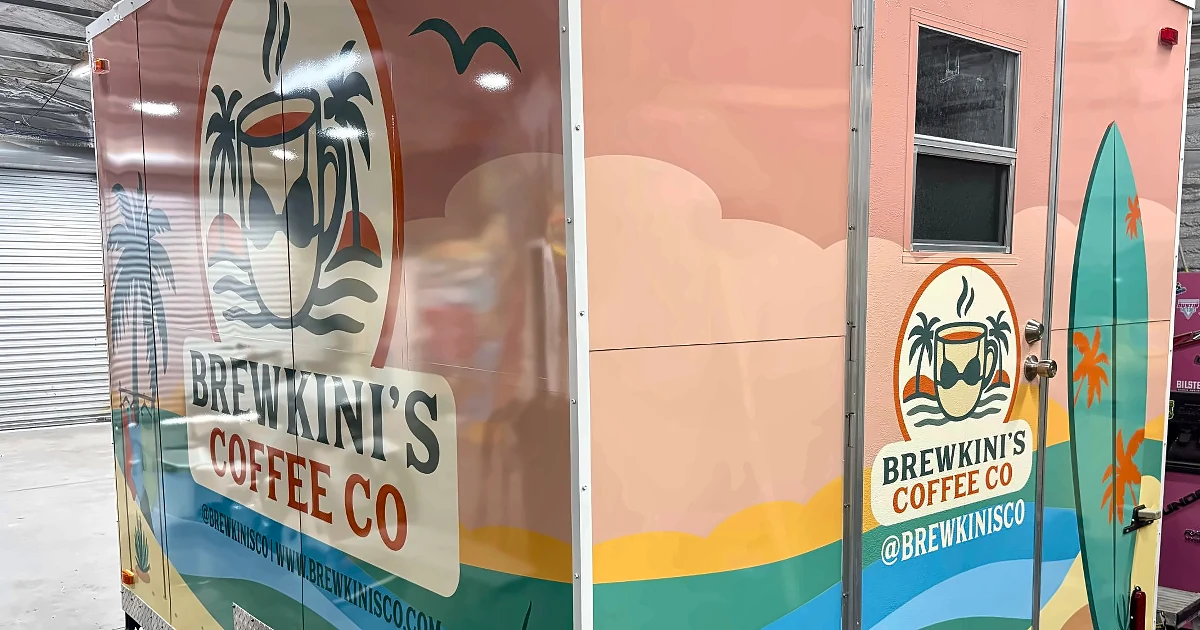
You can see this on real work. The Eagle Moving box truck in our portfolio has rows of rivets running up the box, and the printed mascot, Florida graphic and phone number run straight across them. The Bahr’s Propane Gas & AC trailer shows the same thing on a blue enclosed trailer, with graphics placed over a side that has visible rivet lines and seams.
Design can help, too. A good designer plans where the most important words land so that phone numbers and logos sit across the cleanest part of each panel rather than right on a seam. Our article on The Vehicle Wrap Design Process covers that planning.
Rivets and Seams on Older Trailers
On a used trailer, the rivets themselves deserve a quick look before anything is installed. Loose rivets, rivets with rust around the head, or seams that have started to separate should be fixed first. Vinyl follows the surface it sits on, so it will show a problem rather than hide it. Our article Can You Wrap a Used Enclosed Trailer? walks through the full inspection.
Most of the time, an older trailer’s rivets are fine and only need a thorough cleaning. When we do see an issue, we’ll point it out at the quote so you can decide how to handle it before you invest in graphics.
Caring for Rivet Areas After the Wrap
Rivet areas take more stress than flat panels, so they are worth a quick look whenever you wash the trailer. A little care goes a long way. Hand washing is gentler than a high pressure wand, and if you do pressure wash, keep the nozzle back and avoid aiming straight at rivet heads and edges. If you ever notice film lifting around a rivet, let us look at it early. A small lift is usually a simple fix if it is caught soon.
For more on keeping a wrap looking good, see How Long Does a Vehicle Wrap Last? Caring for Your Wrap. Rivets are one of the main reasons trailers and box trucks need an experienced installer, and when the job is done right, they are simply part of the surface.
Frequently Asked Questions
Wondering How Your Trailer's Rivets Will Look?
Send us a few photos of your trailer or truck, including a close shot of the rivet lines, along with its approximate dimensions. We'll tell you honestly how the surface looks and what your wrap will need.