Trailer Wrap Sizes and Coverage: What Businesses Should Know
Quick answer We regularly wrap enclosed trailers from 5x8 up to 8.5x24, plus custom sizes. Size sets how much surface there is to cover, but coverage decides how much of it gets printed: a full wrap, a partial wrap or vinyl lettering. Doors, nose shape, fenders and vents also change the plan. A few photos usually tell us everything.
Why Size and Coverage Go Together
When business owners ask about a trailer wrap, the first question is usually “how big is it?” Size matters, but it is only half of the picture. A 7×14 trailer with a logo and phone number and a 7×14 trailer covered nose to tail in printed graphics are two very different projects, even though the trailer is the same.
Think of it this way. Size tells us how much surface your trailer has. Coverage tells us how much of that surface you want to put to work. Together they shape the design, the material, the installation time and the quote.
So what sizes do we usually see?
Common Enclosed Trailer Sizes We Wrap
Enclosed trailers are usually described by width and length in feet, so a 6×12 is about six feet wide and twelve feet long. We regularly wrap trailers in these sizes:
- 5×8 and 5×10
- 6×10 and 6×12
- 7×12, 7×14 and 7×16
- 8.5×16, 8.5×20 and 8.5×24
- Custom and specialty sizes
Not sure what size yours is? Just send us a photo, and we’ll help identify it. The listed size also doesn’t tell the whole story. Two trailers with the same footprint can have very different wall heights, nose shapes and door layouts, which is why we always look at the actual trailer before quoting.
What a “Full” Trailer Wrap Usually Covers
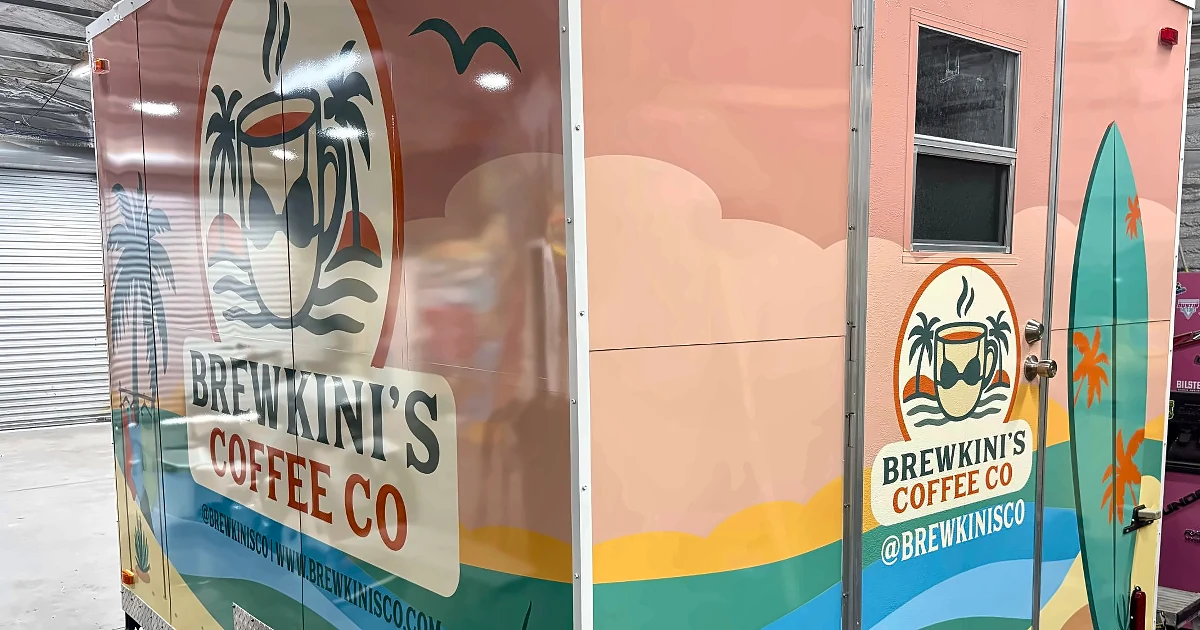
A full trailer wrap covers nearly all of the visible sides with printed graphics. On most enclosed trailers that means the two long sides, the rear door and the front nose. The roof is usually left alone, since almost nobody sees it from the road, though we can talk about it if your trailer is often viewed from above.
Areas Left Clear or Handled Differently
Some parts of a trailer are never covered, or are handled differently.
Hinges, Latches and Other Hardware
Hinges, latches, lights, reflectors and vents stay clear and working. The design is planned around them.
Side Doors and Surrounding Walls
The door and the wall around it are wrapped as separate pieces so the door still opens and closes cleanly.
Diamond Plate and Stone Guards
The textured metal on many trailer noses and fenders is usually left as is.
Trim and Corner Caps
Aluminum trim is often left bare as a clean frame around the graphics.
Once those areas are planned for, the design can make the most of the flat space that remains.
How Larger Trailers Change the Project
On a small 5×8 or 6×10, every inch counts. The design has to be simple and bold, because there just isn’t room for much more than a logo, a short list of services and a phone number. Larger trailers in the 8.5×20 and 8.5×24 range give you something closer to a rolling billboard, with room for big photography, a strong headline and clear contact details.
Planning Seams on Long Trailers
More surface also means more material, more print time and a longer installation, and wide panels need careful planning so seams in the film land in sensible places. On a long trailer, we plan where each printed panel meets the next so a seam never cuts through a face or a phone number.
Partial Wraps and Lettering on Trailers
You don’t need a full wrap to get a professional look. A partial wrap combines printed graphics with the trailer’s factory color, which keeps material costs down while still looking designed rather than stuck on. Vinyl lettering is the simplest option: logo, phone number, website, services and DOT numbers if your operation needs them.
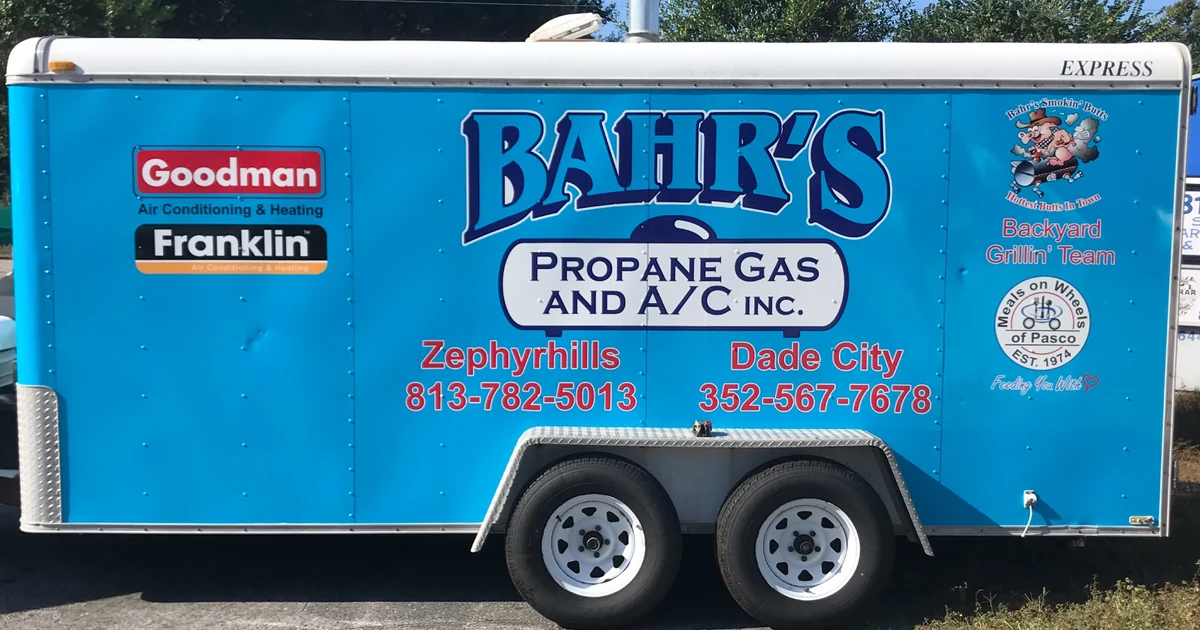
The Red Bag Solutions trailer in our portfolio is a good example of how much a white trailer can say without full coverage. Its large logo, a “Bio-Medical Waste Management” line and a big red phone number fill the side in custom cut printed vinyl, with the trailer’s white finish doing the rest. The Bahr’s Propane Gas & AC trailer takes a similar approach on a blue trailer, with a company logo, phone numbers for two towns and partner brand logos placed across the side.
For a full comparison of these three options across trucks, vans and trailers, see Full Wrap vs. Partial Wrap vs. Vinyl Lettering.
How to Measure Your Trailer for a Quote
You don’t need to measure every panel. For a quote, it helps to send:
- The listed size, if you know it (for example, 7×16)
- Photos of both sides, the rear and the front nose
- A close photo of any side door, vents or damage
- Your logo and any colors or ideas you have in mind
If you’re missing some of that, that’s okay. We’ll help you through the rest. Size and coverage are what turn a trailer from equipment into advertising, and knowing both up front is what keeps your quote accurate and your design built for the trailer you actually have.
Frequently Asked Questions
Not Sure What Your Trailer Needs?
Send us a photo of each side and the listed size if you know it. We'll help you choose the coverage that fits your trailer, your message and your budget.